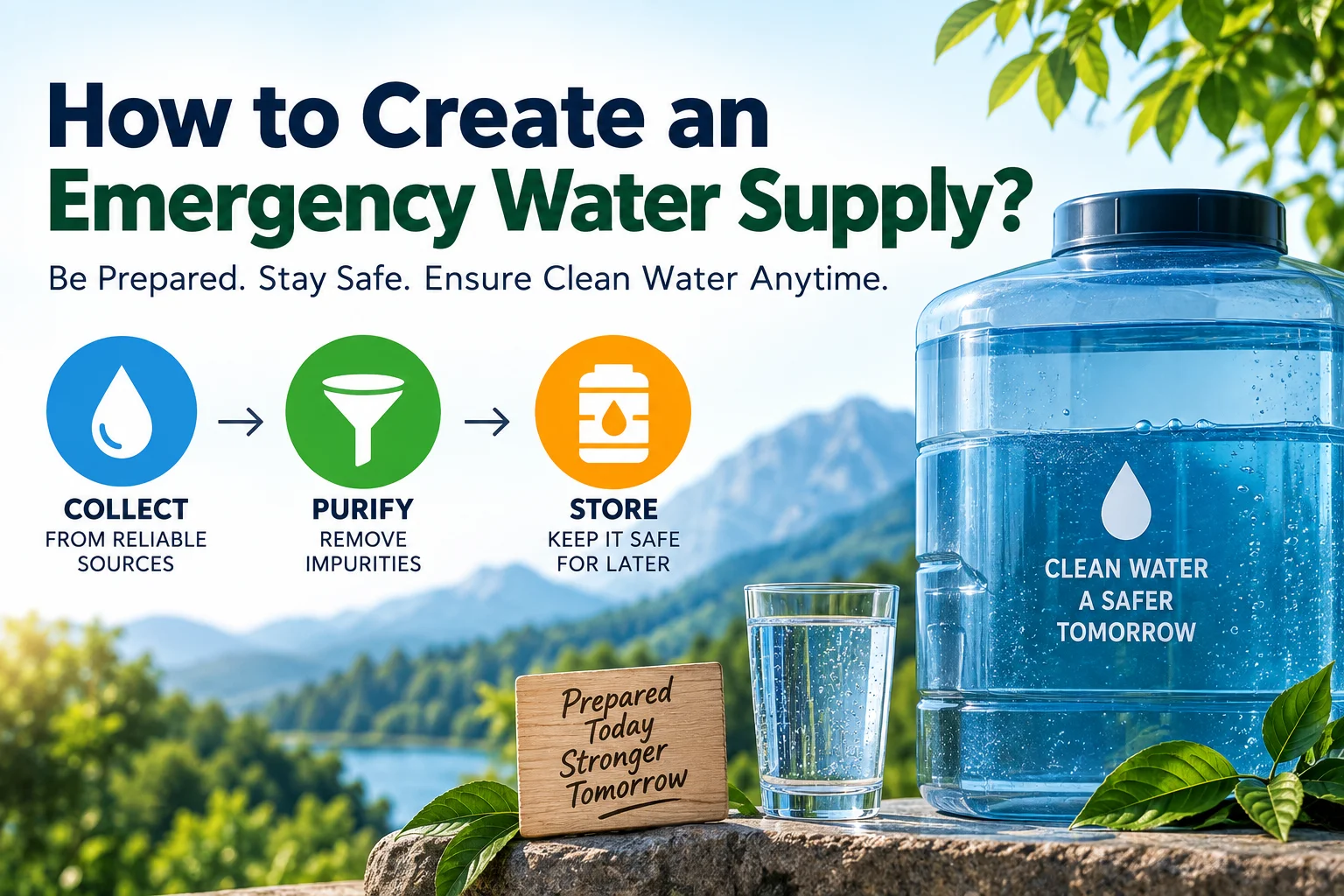
How to Create an Emergency Water Supply?
📅 Updated September 2026 ⏱ 7 min read 🧯 Emergency Preparedness
How to create an emergency water supply: collect, purify, and store

Key Points

  • During a water emergency, your normal tap or municipal supply may not be safe to use.
  • Plan to store at least a 3-day water supply, with 2 weeks as a stronger target.
  • Store roughly 1 gallon of water per person, per day, for drinking, cooking, and basic hygiene.
  • Unopened bottled water is generally the safest and simplest starting point.
General guidance here is informed by publicly available emergency-preparedness resources, including the CDC's water emergency guidance — always check official sources for the most current recommendations for your area.
Where to Start

Why Bottled Water Should Be Your First Layer

Water Freedom System aside, the single most reliable starting point for any emergency water plan is simple: unopened, commercially bottled water. It's already sealed, already tested, and doesn't depend on how well you cleaned a container or how carefully you stored it. If you have the budget and space, building your baseline emergency supply around bottled water first — before adding other layers like stored tap water or a DIY system — gives you the most dependable foundation.

If bottled water isn't available or you run out, water can still be made safer to drink through boiling or proper disinfection methods, but that's a fallback, not a first choice. Every additional layer beyond bottled water — stored tap water, filtration, or a DIY atmospheric water generator — is worth having, but shouldn't be your only plan.

The Numbers

How Much Water You Actually Need

Water Freedom System supporters and emergency-preparedness guidance generally agree on the same baseline: store at least 1 gallon of water per person, per day. That amount needs to cover drinking, cooking, and basic hygiene like brushing teeth — it adds up faster than most people expect.

Household Size3-Day Minimum2-Week Target
1 person3 gallons14 gallons
2 people6 gallons28 gallons
4 people12 gallons56 gallons

Consider storing extra beyond these baseline numbers if your household includes a pregnant person, anyone who's sick, pets, or if you live somewhere hot — higher temperatures increase daily water needs across the board.

Step-by-Step

Building Your Emergency Water Supply

Water Freedom System-style planning works best when it's broken into a clear sequence. Here's the practical order to follow.

1

Choose a Safe Container

Use food-grade water storage containers where possible — the kind sold at camping or surplus supply stores. If reusing another container, make sure it seals tightly, is made of durable unbreakable material (not glass), and was never used to hold chemicals like bleach or pesticides.

2

Wash the Container

Wash it thoroughly with soap and rinse completely before it ever touches drinking water.

3

Sanitize It

Mix a small amount of unscented household chlorine bleach (5–9% sodium hypochlorite) with water to create a sanitizing solution, cover the container, and shake so the solution reaches every interior surface.

4

Rinse and Air-Dry

Pour out the sanitizing solution after a short wait, then let the container air-dry completely before filling it with water.

5

Fill, Label, and Store

Fill with clean water, seal tightly, label it "drinking water" with the fill date, and store it somewhere cool (roughly 50–70°F), dark, and away from any household chemicals.

6

Rotate Every Six Months

Replace stored water on a roughly six-month cycle to keep your supply fresh, and note the swap date each time.

Avoid These Mistakes

  • Never reuse a container that previously held bleach, pesticides, or other chemicals — residue can contaminate your water even after washing.
  • Don't scoop water out with your hands, and use a clean scoop each time to avoid introducing contamination.
  • Don't skip the sanitizing step just because a container looks clean — invisible residue and bacteria are the real risk.
Where This Fits In

Where Does Water Freedom System Fit Into This Plan?

A supplemental layer, not a replacement for stored water

Water Freedom System is best thought of as an additional, renewable layer on top of a properly stored water supply — not a substitute for it. Traditional stored water (bottled or properly sanitized and rotated) remains the most dependable, predictable option because it doesn't depend on humidity, electricity, or equipment working correctly when you need it most.

Where a DIY atmospheric water generator can genuinely add value is as a renewable backup once your baseline storage is already in place — particularly for longer-duration emergencies where stored water may eventually run low, and especially in humid climates where the unit has a realistic chance of producing meaningful daily output. Build and test it well before you actually need it, since a first-time build attempted mid-emergency isn't a reliable plan.

Want to add a renewable backup layer to your emergency water plan?

See the Guide
FAQ

Common Questions About Emergency Water Storage

A common baseline is at least 1 gallon of water per person, per day, for a minimum of 3 days — with a 2-week supply as a stronger target where storage space allows.
Unopened, commercially bottled water is generally considered the safest and most reliable option, since it's already sealed and doesn't depend on how well a container was cleaned.
If you're filling and storing your own containers, it's commonly recommended to replace that water roughly every six months to keep it fresh.
It shouldn't be treated as a full replacement. It can serve as a supplemental, renewable source alongside a properly stored water supply, particularly if it's already built, tested, and powered before an emergency happens.
Build the Next Layer

Ready to Add a Renewable Backup?

Once your stored water supply is in place, the Water Freedom System guide walks through building a DIY atmospheric water generator as an additional, renewable layer of water security.

Explore the Guide